
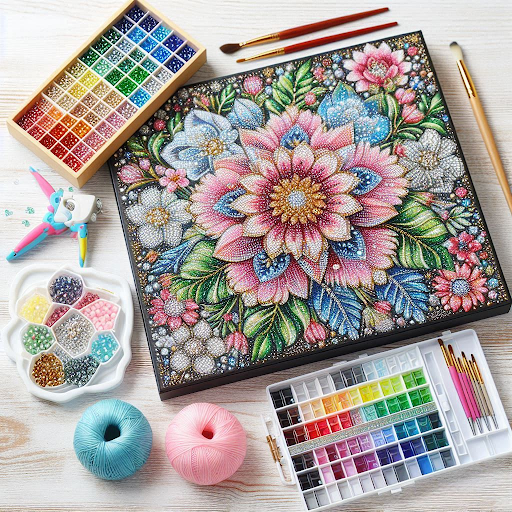
Diamond painting has become a popular hobby for those looking for a fun and relaxing way to create beautiful art. One common mistake in diamond painting is removing the entire cover paper all at once, exposing the adhesive and making it difficult for diamonds to stick. To avoid this, it is better to peel back a small section at a time, ensuring the adhesive remains clean and tacky.
Another frequent issue is incomplete coverage of the canvas, which happens when diamonds are not pressed down firmly enough or sections are accidentally skipped. To ensure each area is covered, use a roller or fingers to press down the diamonds and carefully check for missed spots. Using a Figured’Art Diamond Painting kit can provide a structured start to this engaging art form.
Accidentally spilling gems is another frustration many face. A helpful tip is to use a handheld vacuum on a low setting to collect the spilled gems, ensuring they stay clean and reusable. Following these tips can transform your experience, allowing you to enjoy the creativity and satisfaction that comes with diamond painting.
Key Takeaways
- Peel back the cover paper gradually to keep the adhesive clean.
- Press diamonds firmly and check for missed spots to ensure complete coverage.
- Use a handheld vacuum on low to collect spilled gems.
Setting Up for Success
Proper setup is crucial to avoid common mistakes in diamond painting. It involves selecting quality materials, preparing a well-organized and well-lit workspace, and familiarizing oneself with the components of the diamond painting kit.
Choosing the Right Materials
Using high-quality materials can significantly enhance the diamond painting experience. Opt for canvases with strong adhesive to ensure the diamonds stay in place. The diamonds themselves should be uniformly cut to provide a consistent sparkle. Investing in a good diamond painting pen and a sturdy tray can make the process smoother and less frustrating.
Avoid low-quality materials that can lead to issues such as diamonds not adhering properly or the adhesive losing its stickiness. Check reviews and recommendations to find reputable suppliers who offer durable and reliable tools.
Preparing Your Workspace
A well-prepared workspace can make diamond painting more enjoyable and efficient. Ensure the area is well-lit; natural light is best, but a good-quality desk lamp can suffice. Some may find a magnifying glass useful for working on detailed sections. Keep all tools and materials organized and within easy reach.
Using a flat, stable surface to lay out the canvas helps prevent accidental spills and mishaps. Arrange the diamonds in small, labeled containers or trays to avoid confusion. Investing in a comfortable chair can also make longer painting sessions more pleasant.
Understanding Diamond Painting Kits
Knowing what’s included in a diamond painting kit can help avoid unnecessary errors. A typical kit contains the canvas, diamonds, adhesive, a pen, and a tray. Some kits may also include tweezers for picking up diamonds or a wax pad for the pen’s tip.
Familiarize yourself with the canvas. It’s crucial to keep the canvas protected from dust, dirt, and pet hair, as contaminants can compromise the adhesive quality. Unrolling the canvas and letting it lay flat for a few hours can reduce wrinkles and creases.
Ensure you understand the chart or legend included with the kit, as it will guide you on where each diamond color should be placed. Properly grasping each component of the kit can save time and prevent mistakes.
Mastering the Techniques
Achieving success in diamond painting requires attention to detail and proper technique. This section covers effective diamond placement, maintaining your diamond painting, and finishing and framing your artwork.
Effective Diamond Placement
Precision in placing diamonds is vital for a polished final product. Using a diamond pen, apply a small amount of wax to pick up and place each diamond accurately on the chart’s symbols. Following the color-coded chart ensures that each diamond is placed correctly. For straighter lines, employ a straightener tool or use masking tape along the edges. This helps maintain a uniform appearance.
Pressing diamonds firmly onto the adhesive canvas can prevent them from falling off. Using a lint roller can help flatten and secure the diamonds. Working on small sections at a time keeps the workspace manageable and clean.
Maintaining Your Diamond Painting
Regular cleaning is essential to keep the canvas adhesive and diamonds free from dust and debris. Cover the canvas with protective film or parchment paper when not in use to shield it from contaminants. Organize diamonds by color and shape using labeled containers or sorting trays. This organization speeds up the painting process and reduces errors.
Applying consistent pressure while placing the diamonds ensures strong adhesion. If diamonds are accidentally spilled, a handheld vacuum set to a low setting helps gather them quickly. For best results, follow all provided instructions closely and use high-quality materials.
Finishing and Framing
Once the diamond painting is complete, sealing the artwork can preserve its sparkle and longevity. Products designed specifically for sealing diamond paintings fill the spaces between the diamonds, enhancing the overall shine and securing them in place. After sealing, ensure the canvas is completely dry.
Framing the finished product protects it from damage and showcases the artwork. Choose a frame that fits the canvas size. Some prefer to use a glass cover for additional protection. Flattening the canvas before framing is crucial to avoid wrinkles. Use a rolling pin or similar tool for flattening.
By mastering these techniques, diamond painters can create stunning, durable pieces of art.
Conclusion
Diamond painting can be an enjoyable and fulfilling hobby when approached correctly. By addressing common mistakes such as incomplete canvas coverage, improper handling of gems, and incorrect peeling techniques, enthusiasts can enhance their experience.
Consulting online resources and taking breaks can prevent frustration and errors. With these practices, diamond painting can become a more seamless and pleasant activity.