
Parenting can be very satisfying when it comes to teaching children new skills. It allows us to share our passions while giving them tools they can use in life. With all of the options available to parents on what to teach them, pool may not be at the top of the list as an activity to teach your kids. But should you teach yours this game of strategy and precision?
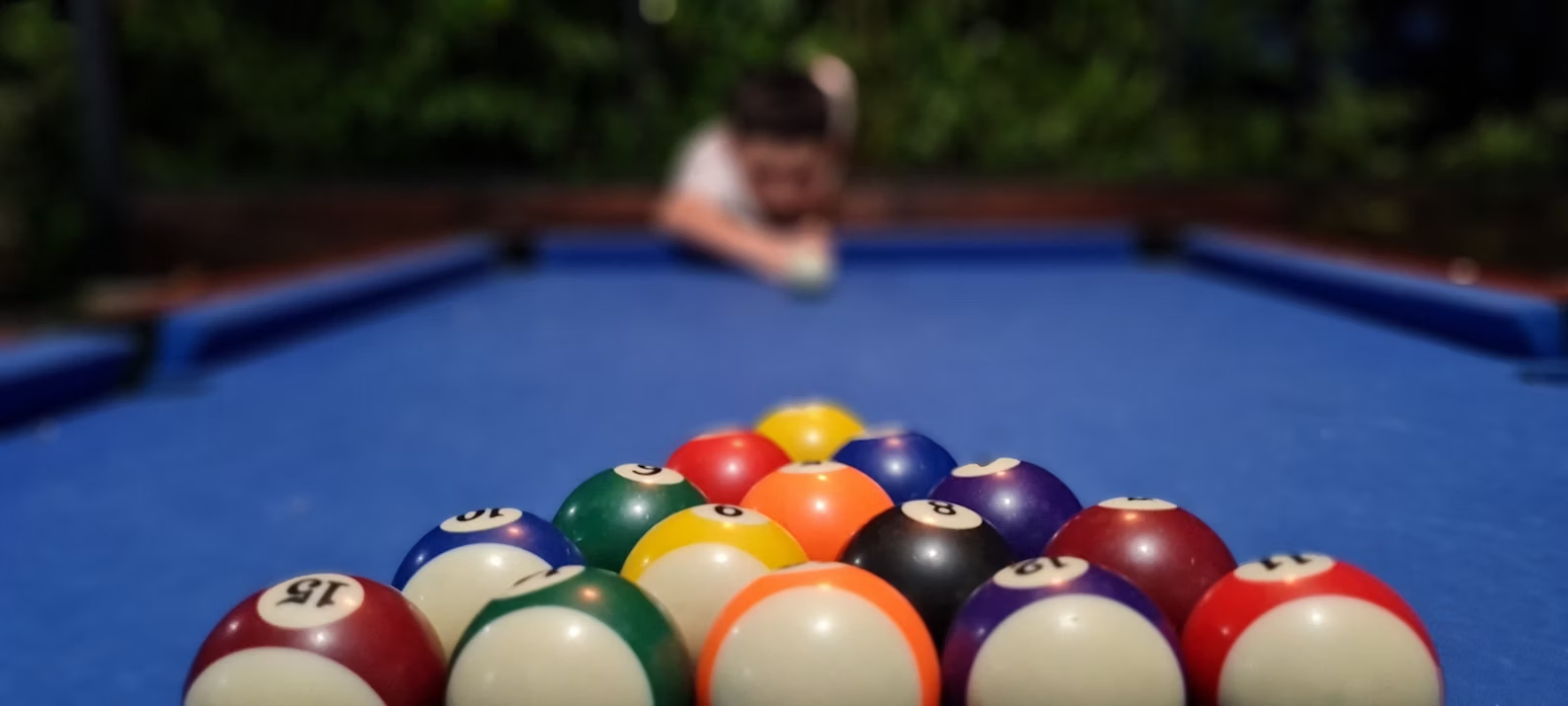
A Game That’s More Than Just Balls and Pockets
Pool isn’t just another pastime game that’s only enjoyed in bars or tournaments, it’s more than that. Pool combines focus, geometry, hand-eye coordination and sportsmanship into a neat triangle of balls. Pool has deep historical roots dating back to its initial form as a lawn game closely related to croquet. By teaching your children pool, you offer them something not only entertaining but enriching in many other ways as well. But is teaching this game worth your while? Let’s look at its merits so that you can assess if you should pursue this skill further.
The Benefits of Teaching Pool to Kids
Develops Strategic Thinking
Pool is a game of strategy, requiring players to carefully plan their moves and think multiple steps ahead. Each shot demands precision and foresight in order to successfully position the ball effectively while challenging their opponents. Engaging in this tactical approach promotes critical thinking skills while teaching kids to evaluate situations and predict outcomes. Skills which extend far beyond playing pool itself, giving children greater confidence when facing life’s challenges with more ease and creativity. Pool provides an enjoyable yet educational experience.
Enhances Focus and Patience
Kids can often be full of energy, making it hard to concentrate or stay patient. Pool is an effective way for children to channel this excess energy into productive activity that forms concentration while teaching a calm approach to problem-solving. Eventually these lessons may translate to other areas of their life where patience may be called upon more frequently and with greater determination.
Promotes Hand-Eye Coordination
Aiming and striking the cue ball offers an excellent workout for motor skills and hand-eye coordination in children, encouraging them to control their movements with precision while accurately judging distances. Strengthening physical abilities beyond playing itself. By developing these abilities, children may notice improvements beyond playing itself. Whether playing sports or performing daily tasks more easily or effectively due to enhanced coordination and physical awareness. Learning controlled movements not only help with their physical development but also build confidence that they can handle challenges that require accuracy and focus.
Social Interaction and Team Skills
Playing pool can create healthy competition while encouraging cooperation, providing your kids a platform to interact with others, learn social norms like taking turns, and experience both winning and losing gracefully. By introducing your children to pool, you’re giving them an avenue for positive socialization that forms team skills while developing self-esteem through participation in an activity they love.
Encourages Critical Math and Geometry Skills
Want an effortless way to create your child’s grasp of geometry? Pool could be just what’s needed. With its focus on angles, force, and trajectory calculations, pool is an engaging way to introduce children to mathematical concepts without them even realising it’s educational.
Challenges to Consider
Size Matters
Typical pool tables can be quite large and young children may feel intimidated when trying to reach across it. A more child-friendly setup would include smaller tables or adjustable cues in order to keep them engaged and comfortable as they practice pool.
It’s Not a Substitute for Physical Exercise
Although pool is great for mental stimulation and coordination development, it shouldn’t be seen as a replacement for physical exercise if that’s your goal. If that’s the case for your kiddo, make sure you add more active sports such as football or swimming into their routine to boost their overall physical fitness.
Potential Costs
It’s important not to underestimate the financial repercussions of introducing your kids to pool. From purchasing a table and quality cues and balls, these costs can quickly add up. Consider starting small, perhaps with a compact table or visits to local pool halls, before making more significant investments in equipment or lessons.
Patience Needed (for Parents Too)
Teaching children any new game takes patience, but teaching pool may put it to the ultimate test. Shots may go astray, balls might wind up in unintended pockets or children might lose interest quickly if the progress seems slow. Your job is to keep the experience enjoyable, lighthearted and encouraging for them.

Photo by Mohamed M on Unsplash
Online Pool Games
For those who prefer digital entertainment, an online pool game offers an ideal solution. Available across various platforms (smartphones, tablets and computers) online pool games provide plenty of entertainment when playing pool at any time or place. Providing engaging features such as practice modes, multiplayer options and tournaments, these digital offerings allow players of all skill levels to experience this game whenever and wherever. It also has tools to introduce beginners into its basics, which can be a perfect option to get your kids started with this game without needing the physical setup costs.
How to Get Your Kids Started
Start Small
Don’t overwhelm your children by beginning with a full-size pool table, as this may feel intimidating that they can’t reach across. Instead, opt for smaller options tailored specifically for children like mini pool tables or tabletop versions. Starting small helps young players understand the basics without feeling intimidated by such a big object. You can also help mold their confidence while keeping the experience age-appropriate by starting small.
Keep It Fun
Make the learning of pool an engaging experience by making it into a game filled with mini challenges. Focus on specific skills like potting the ball into an easier pocket or practicing basic breaks. Breaking up this game into manageable tasks keeps young learners motivated and engaged with it all the way. Celebrate each accomplishment, no matter how small, to boost their confidence and keep the experience enjoyable for them. A positive approach and encouragement will go far in strengthening their love of this sport. Engaging children in these activities through playful challenges will not only increase their curiosity but also help form a sense of accomplishment, making the experience both rewarding and satisfying for you and them. Remember to make their introduction to pool fun so they develop lasting appreciation for it.
Teach the Rules Gradually
Pool has many rules and presenting them all at once can be an overwhelming prospect for kids. Instead, focus on teaching children the fundamentals to ease them into the game gradually. Concepts like potting balls correctly and avoiding common fouls can all help ease them in more effectively. Once they grasp these fundamentals and feel more confident, you can gradually introduce more advanced rules, such as positioning their cue ball for strategic shots or understanding different game variations such as 8-ball or 9-ball. By gradually increasing complexity over time, children will have an opportunity to advance their skills and understanding at a comfortable pace. This approach not only keeps the game enjoyable for them but also ensures they remain engaged and motivated for learning. Remember that confidence building and creating enjoyment for the game should take precedence over strict adherence to all its rules from the beginning.
Proper Equipment
While it might be tempting to give children regulation-size cues, it is important that you consider their individual size and ability. Younger children will gain more from shorter, lighter cues designed specifically for ease of use. Smaller cues are easier for young learners to handle, enabling them to focus on honing proper technique without the added challenge of manipulating heavy or oversized cues. By providing equipment suited specifically to their needs, you set them up for a more enjoyable and successful learning experience. This approach not only builds confidence in children but also allows them to focus on understanding and practicing the fundamentals of the game. Selecting appropriate tools is also important in creating an ideal learning environment where children can hone their skills while building genuine connections to it, all while having fun and keeping engaged.
Dispelling Misconceptions About Pool
Some parents hesitate to introduce their kids to pool due to outdated perceptions that associate the game with smoke-filled parlours or adult-only environments. But today, pool is more family-friendly than ever. From community recreation centres and tabletop models in living rooms, all the way through pool games available online that you can play anywhere. Pool can be made as enjoyable and inclusive an experience as you want. It all depends on you.
Photo by Patti Black on Unsplash
Conclusion
Pool is an engaging activity for children to participate in that provides mental, social and motor skill benefits that extend far beyond mere fun. But like any activity, it requires careful consideration of each child’s interests and developmental stage before jumping in. Start small, keep it fun, be patient. The goal here isn’t necessarily raising another pool champion, rather it’s about creating memorable bonding experiences while teaching your kids a skill they may take pride in for life. Who knows, this can even become one of their fondest childhood memories by teaching them the fundamentals.