
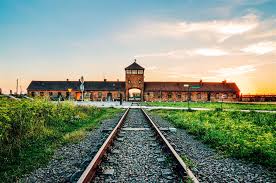
What is Auschwitz?
Auschwitz, officially known as Auschwitz-Birkenau, was a complex of over 40 concentration and extermination camps operated by Nazi Germany during World War II. Located near the town of Oświęcim in Poland, it has become a symbol of the Holocaust, where approximately 1.1 million people were murdered; about 90% were Jews. The complex included Auschwitz I, the original camp, and Auschwitz II-Birkenau, which was both a concentration and an extermination camp with numerous gas chambers and crematoria. Other parts of the complex served as labor camps.
Today, Auschwitz I and Auschwitz II-Birkenau serve as a museum and memorial. Visitors can explore the preserved facilities, including the barracks, railway tracks that transported victims to the camps, and the remains of the gas chambers and crematoria. This site stands as a testament to the horrors committed and is open to the public, drawing large numbers of visitors each year who come to remember and learn from the atrocities of the past.
A Lesson in History at Auschwitz-Birkenau
Auschwitz-Birkenau, also known as the Auschwitz-Birkenau State Museum, was the largest of the German Nazi concentration camps and extermination camps. Located in Oświęcim, about 70 km from Krakow, this camp was the site of mass murder of over a million people, primarily Jews, but also Poles, Roma, and members of various other nationalities and social groups. A visit here provides a direct encounter with a difficult but extremely important part of world history.
Memory and Reflection at the Auschwitz Concentration Camp
Auschwitz is not just a museum; it is foremost a place of remembrance. Walking between the barracks, through the gate bearing the inscription “Arbeit macht frei” (Work sets you free), one can pause and reflect on the atrocities that took place here. It is a time for personal reflection on the value of life and the horrific consequences of hatred.
Education Against Hatred in Poland – Guided Tour
In today’s world, as witnesses to these events pass away, the importance of educating the younger generations grows. Auschwitz serves as a reminder of where extreme hatred and intolerance can lead. A visit to Auschwitz is part of educational programs for many schools around the world, forming a foundation for teaching about the Holocaust and its consequences.
Organizing Your Visit: Guided Tour from Krakow
Visiting Auschwitz from Krakow is relatively straightforward, thanks to the well-organized tourism infrastructure. One of the most convenient options is to take an organized Auschwitz Birkenau Tour from Krakow. A These tours often include transportation to and from Krakow, admission tickets, and a professional guide who provides a detailed account of the camp’s history. An organized tour not only makes it easier to reach the site but also allows for a deeper understanding and contextualization of what you see and hear.
Emotional and Ethical Aspect of Visiting the Auschwitz-Birkenau Memorial Site
Visiting a place like Auschwitz is an intense emotional experience. Many describe it as a life-changing event, altering their view of the world and human values. It is also an opportunity to pay tribute to those who lost their lives due to relentless wartime atrocities and to commit to preventing such phenomena in the future.
Conclusion: Why Choose to Visit Auschwitz Museum
Deciding to visit Auschwitz during a trip to Krakow is not easy. It is an experience that profoundly moves and prompts reflection on the darkest aspects of human history. However, it is also an incredibly important educational experience, reminding us of the need to combat hatred and promote humanitarian values. An organized tour from Krakow is one of the easiest ways to visit this place, allowing you to focus on the historical and emotional experience without the additional stress of organizing the trip.
